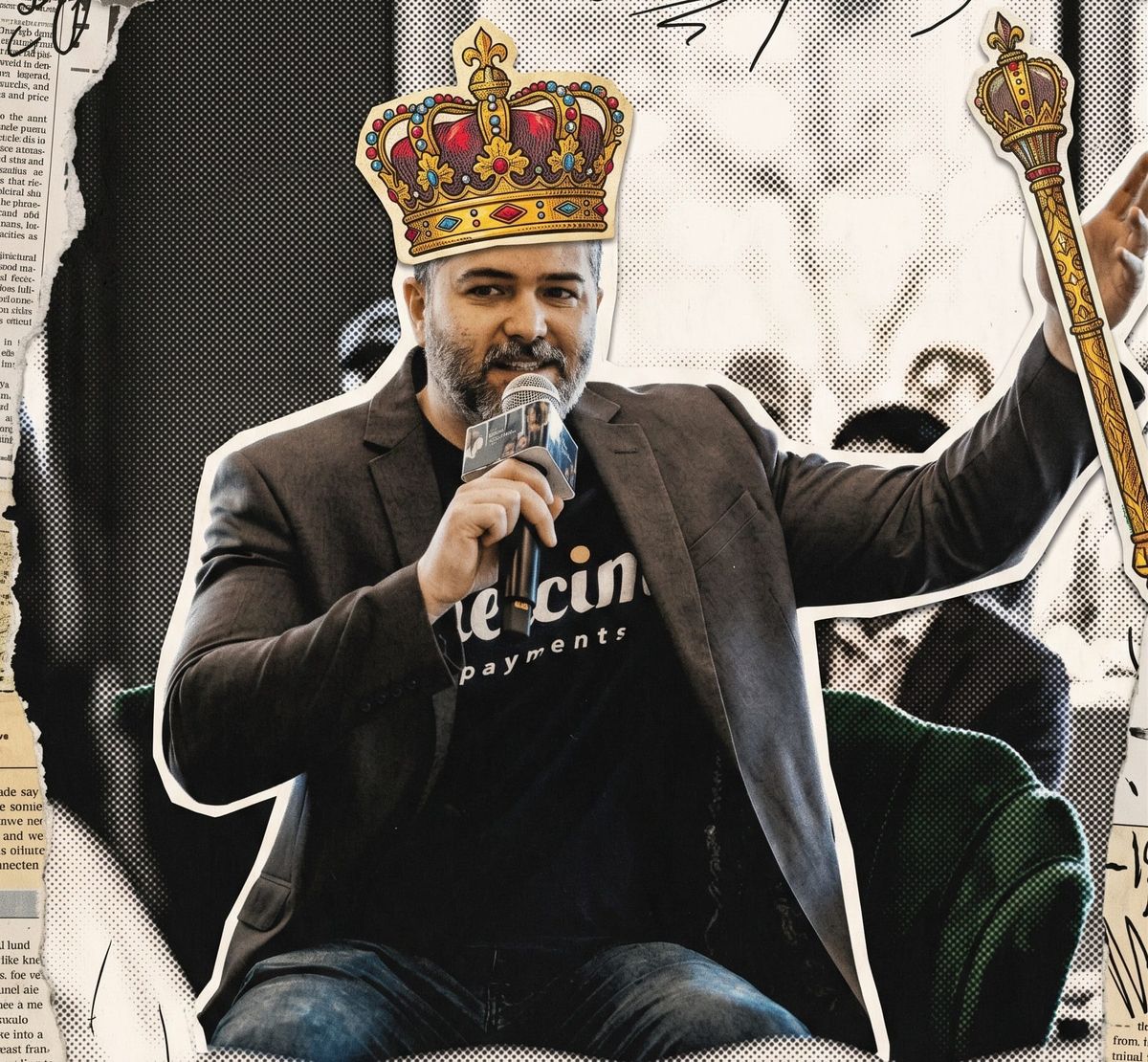
Founders shouldn't be God-kings
A senior leader at Helcim, someone I very much respect, recently shared some raw feedback with me. "You haven't created a culture of high-agency." Ouch. Insightful, and bruising.
How the heck did I get here?
I've come to pride myself on what I thought was great leadership. We've worked hard to build a top-tier employer brand. We make our culture book public and list it on every job posting. We're transparent to a fault, we don't hire brilliant assholes, and we obsess over talent density. I'd have called us a high-"EQ" organization. And yet here was the feedback, telling me I was failing as a leader.
This story starts a month ago. Timelines were slipping, and release dates for new products kept getting pushed. I became frustrated, and my instinct went straight into "founder mode," which is like airplane mode, but for everyone else's input.
Didn't the team understand the importance of the work? Why hadn't they worked the weekend to get it done? Should I just code it myself to get them unstuck? Obviously the culture was missing something. Time for a new decree! "At Helcim, we don't miss timelines!!"
With my frustration clearly visible, I confronted my executive team. It wasn't productive, and everyone left frustrated. Outcomes like that had been getting more frequent in recent months, and I was starting to feel like I was losing my effectiveness as a leader.
That same day I happened to have lunch scheduled with someone who used to work at a prominent tech giant. Curious, I asked, "What's the culture like?" Their answer: "The founder has created a company where all decisions are made by one person."
Was that what founder mode looks like in its purest form? Is that what's needed to succeed on a massive scale? Is that what I wanted? A founder might be able to become a little God-king in their own little kingdom, but kingdoms have a ceiling, and it's exactly the height of the king. A company where every decision runs through one person can only be as smart as that person on their best day, and only as fast as their calendar. I don't want a company that scales to the size of my attention span. I want one that outgrows me.
Then came the meeting with the senior leader I mentioned at the start. I asked a very direct question: "Where am I screwing up as a CEO?" His answer was just as direct: "You haven't created a culture of high-agency. Planning is still too top-down. Leaders are working on these plans, but they weren't brought in enough to make their own decisions on them, to really understand the trade-offs, and to ultimately feel like they have the agency to achieve the outcomes you want."
Ah.
I get a lot of feedback, but this one cut through more than usual. I sat on it all evening and finally asked myself a very direct question: "Do I trust my team?"
You can achieve a lot with an authoritarian approach to leadership. The control feels necessary for a while as you build a business from nothing, constantly under pressure from extinction-level threats on all sides. The "wartime CEO" (a term coined by Ben Horowitz) is a mode that can take you surprisingly far, to the point that you start to think it's just the normal way to operate.
Ultimately, missed timelines aren't what bothered me. What I truly care about is having a super-engaged team that understands the goals, works on the right things, and is empowered to make its own decisions along the way.
So, do I trust my team?
Yes. Just not in any way they could have measured.
I trusted them in my head. My behavior (the decree, the weekend question, the "should I just code it myself?") said something else entirely. Over the years we've grown and hired a really stellar group of leaders, but in hindsight, I don't think I ever gave them the freedom to work together as the group they are.
Do I think they'll make mistakes along the way?
Yes, and that's the point I hadn't grasped until now. High-agency doesn't exist without the freedom to screw up.
And the payoff for putting up with the mistakes is enormous. Decisions get made by the people closest to the problem instead of waiting in my inbox. Leaders who truly own a plan understand its trade-offs, so when reality changes (and it always does) they adjust on the spot instead of calling a meeting to ask what I'd do. The best people stay, because the best people want room to run. And the team builds the one thing I can't do for them: judgment. Judgment only grows when you're allowed to use it, and occasionally get it wrong.
A team that's told what to do eventually gets very good at one thing: waiting to be told. Missed timelines were just a symptom. A team that no longer felt like the plan was theirs was the real issue.
I want to build a company that lasts a hundred years. You don't get there on the judgment of one person who won't be around for most of them. A few bruises and a bit less control is a bargain.
I'm guessing most founders (hopefully) have a moment like this at some point. This was mine: the realization that my leadership style, the one that worked in the past, no longer scales. To get the most out of my team and have them achieve things on a new level, I need to get out of the way.
So my transformation is underway.
I'm working with my executive team to completely overhaul how we operate, and they're leading the charge. Simply put, my job is to set the vision. They come up with the execution plan, and I put my confidence in my senior team to deliver.
And if you run anything bigger than a lemonade stand, you've probably been here too. Control feels like responsibility right up until it becomes the ceiling.
It's a little uncomfortable after so many years of tight control, but also freeing. Because no one feels empowered when a God-king makes all the decisions.
-Nic
P.S. I haven't forgotten the dad joke:
Why was the king only a foot tall? Because he was a ruler!